






Anua
4.3
A fragrance-free heartleaf toner that calms redness and adds light hydration — a gentle daily step for sensitive skin.

 By Claire Doyle · Published October 2026 · 7 min read · How we rank
The 1025 Dokdo Toner from Round Lab and the Heartleaf 77 Soothing Toner from Anua are two popular Korean toners. You use both at the hydrating step straight after cleansing. Side by side they look alike: both are fragrance-free and alcohol-free. The two toners differ in their main ingredients. The Dokdo has a short ingredient list. On that list, deep-sea water and panthenol come near the start, and a protease enzyme comes later. The Anua is mostly heartleaf water, plus a hyaluronic-acid complex. This comparison sets out what those ingredients do, and what neither toner will do.
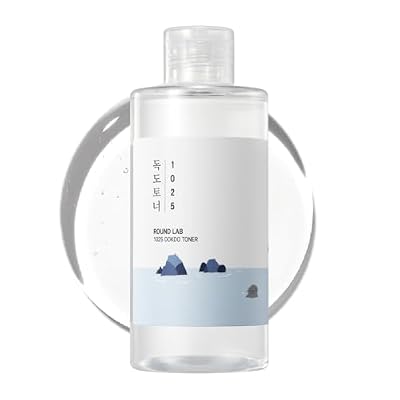
Round Lab 1025 Dokdo Toner
A 16-ingredient hydrating toner. Deep-sea water, glycerin, betaine and panthenol provide the hydration. Allantoin helps reduce irritation. A protease enzyme adds the light exfoliating action the maker describes. No fragrance, no alcohol.
Anua Heartleaf 77 Soothing Toner
Heartleaf water makes up 77% of this toner, with a hyaluronic-acid complex, glycerin and panthenol for hydration. It is fragrance-free and alcohol-free. Anua says it cools skin on contact, and it is made to calm red, reactive skin.
| Feature | Round Lab Round Lab 1025 Dokdo Toner | Anua Anua Heartleaf 77 Soothing Toner |
|---|---|---|
| Main ingredients | Deep-sea water, panthenol, protease enzyme | 77% heartleaf, hyaluronic-acid complex |
| What it's for | Hydration, with a light exfoliating action | Calming redness (maker: cooling) |
| Exfoliating acid (AHA, BHA, PHA) | None | None |
| Best for | Dry, dehydrated skin | Red, reactive, blemish-prone skin |
| Size | 200 ml | 250 ml |
| Fragrance | None added | None added |
Both toners go on straight after cleansing, as the thin, watery layer that puts moisture back before a serum or moisturiser. Both leave out fragrance and alcohol, and that is largely why reactive skin tends to tolerate either one. Neither contains an exfoliating acid. These are acids that loosen dead skin cells. They come in three groups: alpha hydroxy acids (AHAs), beta hydroxy acids (BHAs) and polyhydroxy acids (PHAs). Neither toner is a brightening or acne treatment. There is one difference in exfoliating action. Round Lab lists a protease enzyme in the Dokdo and describes a light exfoliating action from it. The Anua contains no enzyme like this. If you want a toner that visibly smooths rough skin or fades marks, choose a toner with an exfoliating acid instead.
The Dokdo is the shorter formula, with 16 ingredients on the maker’s list. Deep-sea water from the sea around Ulleungdo, a Korean island, is the ingredient in the name and the one the brand talks about most. As an ingredient it is a mineral-rich water, and there is little evidence that it does much for skin on its own. The hydration comes from the humectants beside it, which are ingredients that draw water into the skin: glycerin, betaine and panthenol. Panthenol is a form of vitamin B5 used in skincare. A randomised, placebo-controlled trial published in Arzneimittelforschung in 2000 tested dexpanthenol, the form of panthenol used in cosmetics. It was applied to the skin for seven days. Afterwards, the outer layer of the skin held more water and lost less water. Allantoin is included to reduce irritation. The protease is an enzyme that breaks down protein, and Round Lab describes it as lifting old, dead skin cells. The maker gives no percentage for it, so how much it does is hard to say.
The main ingredient in the Anua is heartleaf. Heartleaf, or Houttuynia cordata, is a herb used in Korean herbal medicine for irritated skin, and heartleaf water is the first ingredient on the maker’s current list, at 77%. The evidence that it calms skin comes only from lab and animal studies. A review of the plant’s pharmacology published in the Journal of Ethnopharmacology in 2018 gathered cell and animal studies of Houttuynia cordata and reported anti-inflammatory and antioxidant activity. The review had no human clinical trials to draw on. It also looked at the plant as a whole, so none of its findings are specific to skin. So the calming claim is based on lab and animal studies only, with no studies in people to back it. Hydration comes from a hyaluronic-acid complex, which is several forms of hyaluronic acid, a water-binding humectant, with glycerin, panthenol and betaine alongside. The current bottle is sold as “Heartleaf 77 + Hyaluron”, and the hyaluronic acid is on the list. Our guide to Korean heartleaf covers the plant in more detail.
For dry, tight or dehydrated skin, the Dokdo is the one I’d pick. It has the shorter formula of the two, and dehydrated skin usually does best with plain hydration after cleansing and no extra active ingredients. The protease is the one thing in it that does more than hydrate, and the maker describes only a light action from it. The formula is unlikely to cause a reaction and needs no special technique to apply, so it is an easy first toner.
If your skin goes red or reacts easily, the Anua is the better choice. Heat, wind and hard exercise all leave this kind of skin flushed, and the 77% heartleaf is there to calm that down. Anua says it cools skin on contact, which can help when your face feels hot. It can suit blemish-prone skin too. Anua says it has been tested and does not block pores. It may help calm the redness around a spot. Clearing the spot itself takes a treatment product. One caution: the ingredient list is long and most of it is plant extracts, so patch-test on a small area first if botanicals have bothered you before.
You only need one of these two toners. Both go on at the same step after cleansing, so on any night you would use only one of them, and the second bottle would mostly go unused. Owning both makes sense if your skin changes through the year: dry and tight for most of the year, then red and hot after a day outdoors in summer. Use the Dokdo on ordinary days and the Anua when your skin is red and hot. Whichever you use, apply it to clean skin, follow with your essence or serum and then moisturiser, and add sunscreen in the morning. For other toners, including an exfoliating one, see our best Korean toners roundup.
We gave the two toners close ratings because each one does its own job well. The Round Lab Dokdo suits dry, dehydrated skin that needs plain, dependable hydration, and it also has a light enzyme action. The Anua Heartleaf 77 suits skin that goes red and reacts easily. It is made to calm the skin, and Anua says it cools on contact. Neither contains an exfoliating acid, and neither is a brightening or blemish treatment. Per millilitre the two cost about the same, with the Anua’s larger bottle working out a little cheaper, so price is not a useful way to choose between them. If you still cannot decide, buy the one that matches the problem you notice most often.
A fragrance-free heartleaf toner that calms redness and adds light hydration — a gentle daily step for sensitive skin.
A fragrance-free, alcohol-free toner that rehydrates skin and supports the skin barrier after cleansing.
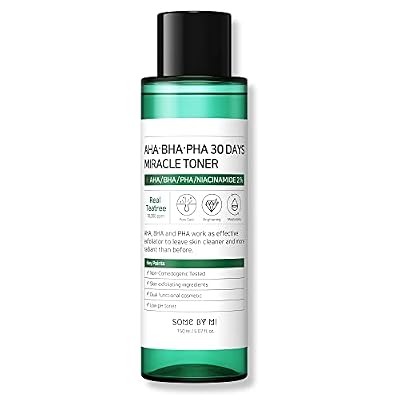
AHA-BHA-PHA 30 Days Miracle Toner
A low-dose AHA, BHA and PHA toner that gently exfoliates blemish-prone skin — where it helps, and why the peppermint oil gives us pause.
 Guide
GuideAHA, BHA and PHA: how to choose a Korean exfoliating acid
Korean skincare treats exfoliating acids as a gentle habit — AHA, BHA and PHA, each with a different job. How the three families differ, and which one your skin will get on with.