AHA, BHA and PHA: how to choose a Korean exfoliating acid
 By Claire Doyle · Published July 2026 · 8 min read · How we rank
Korean brands sell exfoliating acids in their own way: low doses folded into everyday toners and pads, made to be used most nights of the week. Those bottles now line Australian shelves, three-letter abbreviations and all. This guide covers what AHA, BHA and PHA each do, which one suits which skin, how to start gently, and why acids and the Australian sun have to be managed together.
Every exfoliating acid does the same basic job: it loosens the bonds holding dead cells to the surface of your skin, so they shed sooner and the fresher skin underneath shows through. What separates the three families is where each acid can reach, how fast it works, and how much irritation it brings along.
What each acid family does
AHAs — alpha hydroxy acids — are the surface workers. Glycolic acid is the smallest and the strongest of them; lactic acid is a step gentler and pulls in a little hydration as it goes. Because they dissolve in water and not in oil, they can’t get into an oil-filled pore; their work happens up on the surface, where they loosen the dull, tired cells ready to come away. Skin that feels rough, looks flat or hangs onto flaky patches is AHA territory.
BHA — beta hydroxy acid — in practice means salicylic acid. Salicylic acid dissolves in oil, and that changes where it can work: while the AHAs stop at the surface, it travels down into a pore and loosens the plug of oil and dead cells waiting there. That makes it the pick for blackheads, congestion and skin that runs oily. Korean formulas often carry it as betaine salicylate, a milder salicylic-acid derivative, which is one reason a Korean BHA product tends to feel tamer than the Western equivalent.
PHAs — polyhydroxy acids, usually gluconolactone or lactobionic acid on the label — are the gentle end of the family. Their molecules are bigger, so they move into skin slowly and stay near the surface, exfoliating with less of the sting the others can bring; they also hold water, so they hydrate a little while they work. A 2010 review in Clinical, Cosmetic and Investigational Dermatology put their smoothing results in the same range as AHAs while giving skin an easier time of it. For reactive skin, or a first acid you’re nervous about, PHA is the entry point.
Which acid suits your skin?
Start from the problem in front of you and the choice mostly makes itself. Texture complaints — roughness, dullness, flaking, the uneven surface a breakout leaves behind — point to an AHA. Congestion complaints — blackheads, clogged pores, an oily T-zone that erupts now and then — point to BHA, since that problem sits down in the pore, where an oil-soluble acid reaches best. Sensitive or reactive skin, or a first-timer who wants the lowest-risk introduction, points to PHA. If the problem is an inflamed, come-to-a-head spot rather than texture or congestion, that’s a job for a spot treatment, not an acid.
Plenty of Korean products skip the choice by blending all three at low dose, which suits combination skin and anyone whose skin problems don’t all point to one acid. A blend won’t hit any single problem as hard as a dedicated acid, but as an everyday maintenance step it covers the bases with the least fuss.
How do you start without upsetting your skin?
Slowly. Two or three nights a week is plenty at the beginning, with one acid product in the routine and nothing new alongside it. Patch-test it first — inner forearm or behind the ear, a couple of days — and give your skin two to four weeks before judging results. Exfoliation pays off gradually, and rushing it is the usual way people damage their skin barrier — the outer layer that holds moisture in and keeps irritants out.
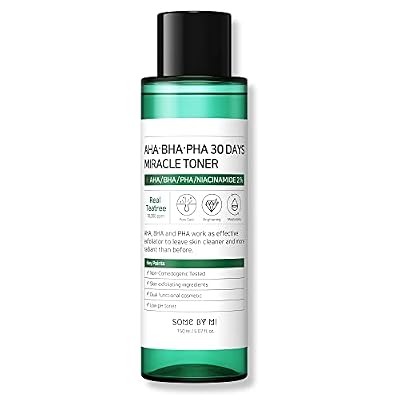
For resilient skin, a low-dose blend in toner form is the easiest first bottle. The Some By Mi AHA-BHA-PHA 30 Days Miracle Toner is the usual entry point — in practice a BHA-and-PHA toner, since the AHA on its label is a token dose of citric acid added mainly to balance the formula’s acidity rather than to exfoliate, as our review sets out. It goes on like any other toner after cleansing. It’s a low-strength formula, so it’s built for nightly use once you’ve worked up to it. Its fragrance and peppermint oil rule it out for reactive skin, though, and a plain PHA product is the safer opening for that group — or for any first-timer who’d rather meet one acid at a time.
On acid nights, keep the rest of the routine boring: cleanser, the acid, then hydrating layers and moisturiser — our Korean routine guide shows the full sequence. Hold the retinoids and strong vitamin C for other nights until you know your skin’s temper — stacking actives is where most acid trouble starts. And if you get stinging that lingers, tightness or new redness, drop back to one night a week, or stop for a week and let your skin settle before deciding whether to try again.
Acids and the Australian sun
The best-measured risk sits with the AHAs. The same 2010 review found that ten-percent glycolic acid, applied six days a week for a month, left skin measurably more sensitive to UVB — and that the extra sensitivity faded within about a week of stopping. That finding is specific to glycolic acid, but the cautious assumption with any leave-on exfoliant is the same: while you’re using one, treat your skin as having less tolerance for sun than usual. While an acid is in your routine, sunscreen is part of the morning. Cancer Council recommends a broad-spectrum, water-resistant SPF50 or SPF50+ sunscreen whenever the UV index is 3 or above — alongside the rest of its sun-protection measures, hats and shade among them. And buying SPF in Australia has rules of its own — our sunscreen guide covers them.
When acids aren’t the answer
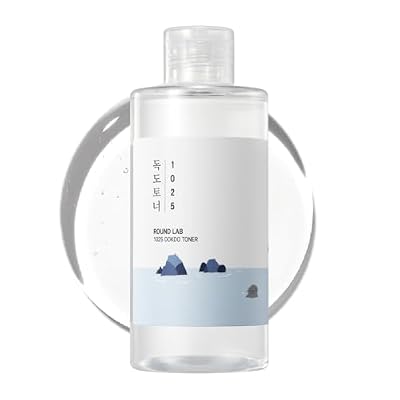
Some skin never makes peace with acids. If every attempt ends in flushing and stinging — even with a PHA, even at one night a week — the useful conclusion is that acids aren’t for your skin — and nothing about a Korean routine requires them. An acid-free soothing toner — the Anua Heartleaf 77 is our pick for that job — fills the same after-cleansing step with soothing, hydrating ingredients, and it’s the better trade for skin that stays touchy.
Even if your skin handles an acid every night, it doesn’t need one every night. Plain nights give the barrier room to repair, and they cost nothing in results — exfoliation pays off over weeks, and a rest night doesn’t reset the clock.
Where acids fit in the routine
An exfoliating acid takes the toner step of a Korean routine: it goes on once the cleansing is done and before the essences and serums, whether it’s a liquid you press in or a pad you swipe. And if you’re still deciding which job your toner should do, our best Korean toners roundup compares an exfoliating pick against a hydrating one and a soothing one.