A gentle Korean skincare routine for acne-prone skin
 By Hannah Reid · Published September 2026 · 9 min read · How we rank
Korean skincare treats breakouts less like something to scrub off and more like inflammation to settle down, which is why the shelves fill up with low-pH cleansers, mild BHA toners and heartleaf 'trouble care' instead of the harsh scrubs and drying spot gels the West reached for. That gentler instinct suits acne-prone skin, and it suits Australia, where sun and heat push oil up and make the marks a breakout leaves behind linger for months. This guide covers the short routine acne-prone skin does best on, the one acid worth using, and how to handle those marks.
Breakouts feel like a reason to do more — a stronger wash, another acid, a drying spot gel. Korean skincare tends to pull in the opposite direction — toward doing less — and for acne-prone skin that restraint is the useful instinct. Here’s the short routine it points to, and the few things worth adding.
Acne-prone isn’t a skin type
Oily, dry and combination skin all break out, so acne-prone cuts across the other types. What they share is a tendency for pores to clog and inflame, whatever the oil level. A pore blocked with oil and dead skin is a comedone: closed over, it’s a whitehead; open to the air, where the plug darkens, it’s a blackhead. Once bacteria and inflammation get involved, you get the red, sore spot most people mean by a breakout.
That shapes the routine, because treating oil alone misses half of it. Drying the skin out doesn’t empty a clogged pore, and skin stripped of its own oil often responds by making more. The aim is to keep pores clearer and calm the inflammation without wrecking the skin barrier — the outer layer that holds water in and irritation out. Plenty of acne-prone skin is already raw from over-treatment: scrubbed, over-exfoliated and dried out with alcohol toner until it’s tight, red and breaking out anyway.
One caveat before we go on. A routine is for the everyday, blackhead-and-the-odd-spot kind of breakout. If yours is painful, cystic — deep, hard lumps under the skin — or won’t shift at all, that’s a job for a doctor: healthdirect, Australia’s public health service, advises seeing your GP if acne is severe, or if it isn’t getting better after trying what a pharmacist recommended, because early treatment can help head off scarring.
Keep the core short
The core for acne-prone skin is four things, and only one of them is a treatment:
- Cleanse morning and night with a gentle, low-pH wash — low-pH meaning close to skin’s own slightly acidic level, so it lifts oil without stripping.
- Treat with a single exfoliating acid, a few nights a week (the next section).
- Moisturise with something light, to keep the barrier steady.
- Protect every morning with sunscreen.
Get those four right and you have a real routine before you add anything else.
Cleansing is where acne-prone skin most often goes wrong, usually by overdoing it. That squeaky, tight feeling after washing means the barrier has been stripped, and stripped skin tends to make more oil and flare more easily. A low-pH gel wash is built to take off sunscreen, sweat and the day’s oil without that tight feeling. Twice a day is plenty; washing more than that, or scrubbing at spots, works against you. At night, if you’ve worn sunscreen or makeup, an oil cleanse first melts it off so the gel wash isn’t fighting through a layer of SPF.
The one acid worth using
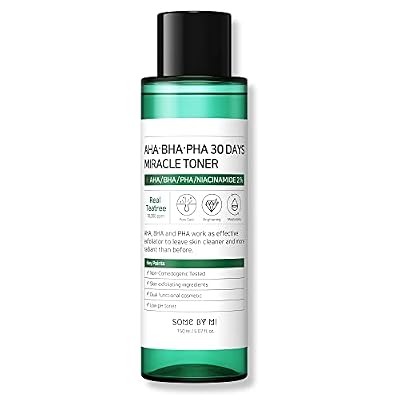
If a single active earns its place here, it’s a BHA — beta hydroxy acid, almost always salicylic acid. The useful thing about it is that it’s oil-soluble. A water-loving AHA (glycolic or lactic acid) works on the surface, but a BHA can get down inside an oil-filled pore and loosen the plug of oil and dead skin from within. That plug is the clog behind a blackhead.
Used a few nights a week — not daily, and not stacked on top of three other acids — a BHA can help keep pores clearer without the raw, over-exfoliated skin that comes from doing too much. Start at two or three nights a week and build up only if your skin stays happy. One acid is the rule: layering a BHA, an AHA toner and a scrub is how acne-prone skin ends up inflamed. Our guide to Korean exfoliating acids lays out how the different acids work if you want the fuller picture.
The other active worth knowing is niacinamide — a form of vitamin B3 that calms redness and helps steady oil, often blended into the same BHA products. It’s gentle and easy to tolerate. In a 2013 trial in the International Journal of Dermatology, a 4% niacinamide gel reduced moderate inflammatory acne about as much as a prescription antibiotic gel over eight weeks, and did better still on oily skin — a reminder that a quiet ingredient can pull its weight. A serum’s concentration won’t match a clinical trial’s, but it’s why niacinamide turns up in so much blemish-focused skincare. Our niacinamide guide goes deeper.
Layer light, and moisturise anyway
The order is the one every Korean routine uses — thinnest and most watery first, richest last — but for acne-prone skin the trick is to keep the whole stack light. After cleansing, and after your BHA on the nights you use it, a thin hydrating layer goes on (a watery toner or essence), then moisturiser, then sunscreen in the morning.
Skipping moisturiser is the other classic mistake. It feels logical to leave oily, breakout-prone skin bare, but skin short of water reads that as a cue to make more oil, and an acid used with nothing to comfort the skin afterwards just leaves it raw. A light, non-comedogenic moisturiser — non-comedogenic meaning formulated not to block pores — gives the barrier what it needs without a heavy, greasy layer. Gel and gel-cream textures suit acne-prone skin better than rich balms. If your skin runs oily as well, our routine for oily skin covers the lightest way to layer.
What acne-prone skin doesn’t need
- Physical scrubs and cleansing brushes. Grinding at inflamed skin spreads bacteria and worsens the irritation; a chemical exfoliant like a BHA does the job without the abrasion.
- A pile of strong actives at once. Benzoyl peroxide plus two acids plus a retinoid is a quick route to a stripped, stinging barrier. Add one thing at a time.
- High-alcohol astringent toners. The tight, cool feeling passes for “working”, but drying the skin out feeds the oil-and-irritation cycle.
- Squeezing and picking. It pushes inflammation deeper and is the main way an ordinary spot turns into a lasting mark or a scar.
- Swapping your whole routine every couple of weeks. Actives take weeks to show, so constant switching means you never learn what helped.
Sunscreen, and the marks a breakout leaves
Sunscreen matters more for acne-prone skin than people expect, for two reasons. The first is that many breakouts fade to a flat brown or red mark — post-inflammatory hyperpigmentation, the extra pigment skin lays down where it was inflamed — and sun exposure deepens those marks and drags them out for months. Daily sunscreen helps stop a healed spot from leaving a lasting brown or red mark you then have to fade. Our guide to fading dark spots covers the ingredients that help.
The second is texture. If sunscreen seems to break you out, the formula is usually the culprit. A light, non-comedogenic gel or fluid SPF sits far better on acne-prone skin than a thick cream, so change textures before you think about going without. Pick one you’ll wear every morning without a second thought. Our sunscreen guide covers the SPF numbers and how Korean sunscreens are regulated in Australia.
Where to start
Building from scratch, start with a gentle low-pH cleanser, a light moisturiser and a daily sunscreen, and give that a fortnight before you add anything. Then bring in one BHA, two nights a week, and hold there long enough to judge it — most actives take a good month to show. For the spots that flare in the meantime, a hydrocolloid pimple patch covers a surfaced spot overnight and helps stop you picking at it. You can see how the steps fit together on our routine page.
And remember that caveat: a routine suits everyday breakouts. The deep, painful or stubborn kind is a different problem. If yours isn’t shifting, a GP or dermatologist can prescribe treatments you can’t buy over the counter. Asking sooner can help limit the marks it leaves.